
Dr. R Adams Cowley didn't just practice medicine—he transformed it. Known as the "Father of Trauma Medicine," he revolutionized emergency care, ensuring that critically injured patients had a real chance at survival.
Born on July 25, 1917, in Layton, Utah, R Adams Cowley grew up in a family that valued education. His father, Wallace William Cowley, worked as a pharmacist, and his mother was Alta Louise Adams Cowley. Young Adams (as he was often called) showed early interest in medicine and became the first person in his family to graduate from college.
An interesting fact about his name: the "R" doesn't stand for anything. It was simply the letter "R," given to honor a grandfather, and became a unique part of his identity throughout life.
After graduating eighth in his class from the University of Utah in 1940, Dr. Cowley earned his medical degree from the University of Maryland. His journey almost ended before it began—homesick and ready to quit medical school, he packed his bags for the bus station. Fate intervened when the dean found him and offered him housing in his own home, a turning point that kept Cowley in medicine.
During World War II, Dr. Cowley served in the U.S. Army Medical Corps in Europe, where he witnessed firsthand how quickly battlefield injuries could turn fatal without immediate care. This experience planted the seeds for his later work in trauma medicine.
Returning to the University of Maryland after the war, Dr. Cowley quickly distinguished himself as an innovative thoracic surgeon. He performed some of America's earliest open-heart surgeries, often operating before heart-lung machines were widely available. His surgical skills saved many lives, but he grew frustrated watching patients survive complex operations only to die days later from shock.

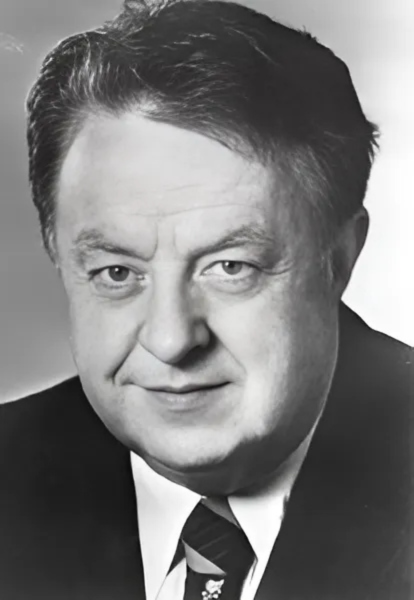
Photo of Dr. R. Adams Cowley during his groundbreaking work in trauma care.

An American Army doctor operates on a U.S. soldier during WWII.
(Courtesy U.S. National Archives)
In 1959, Dr. R Adams Cowley secured a $100,000 grant from the U.S. Department of the Army to establish a trauma unit. What that money built was humble in appearance: a single large room without operating suites—just a supply closet and barely enough space for two beds.
But that unassuming setup would make history.
With this funding, Dr. Cowley launched the first clinical shock trauma unit in the United States. Though primitive, it laid the groundwork for a radical new approach to trauma care. It was here that he coined and championed the term "shock trauma," a phrase—and a philosophy—that would forever reshape emergency medicine.
To skeptics, it looked like a futile experiment. Some mockingly dubbed it the "death lab," given the grave condition of many patients admitted. But Dr. Cowley and his committed team proved them wrong, delivering survival against impossible odds.
By 1968, his vision took flight—literally. After years of persistence, he convinced the Maryland State Police to use helicopters for medical transport, slashing response times and expanding reach. The first civilian medevac flight launched in 1969, marking the start of a new era in trauma transport.
Then in 1970, Dr. Cowley pushed even further—expanding the model statewide. He believed that every Marylander, no matter how remote, deserved access to the same life-saving care. His breakthrough came when a close friend of Governor Marvin Mandel was critically injured in a car crash and received care through Cowley's system. The results were undeniable.
In response, Governor Mandel issued a 1973 executive order creating the Maryland Institute for Emergency Medicine and the Division of Emergency Medical Services. Naturally, Dr. Cowley was appointed as its first director.
What started as two beds and a closet became the blueprint for trauma systems worldwide—and continues to save lives to this day.

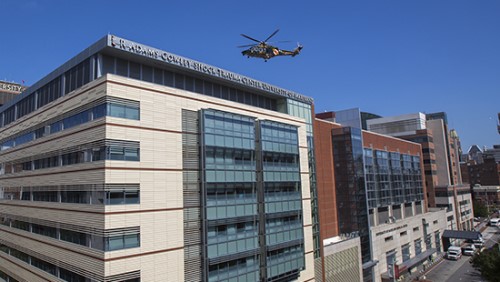

Inside the R Adams Cowley Shock Trauma Center. (Courtesy University of Maryland Shock Trauma Center)
Many colleagues mockingly called it the "death lab" because patients arrived in such critical condition. But Dr. Cowley and his dedicated team proved the skeptics wrong, saving patients who would have died elsewhere.
"There is a golden hour between life and death. If you are critically injured, you have less than 60 minutes to survive. You might not die right then; it may be three days or two weeks later - but something has happened in your body that is irreparable."
This simple but powerful idea changed emergency medicine forever. Dr. Cowley described shock as "a momentary pause in the process of death" - a condition that could be reversed if treated quickly enough. Before this, many severely injured patients were simply taken to the nearest hospital, often with fatal results.
The concept that made Dr. Cowley famous came from his observations while treating patients. He noticed that people who received quick treatment after severe injuries had much better chances of survival. This led him to develop the "Golden Hour" theory.
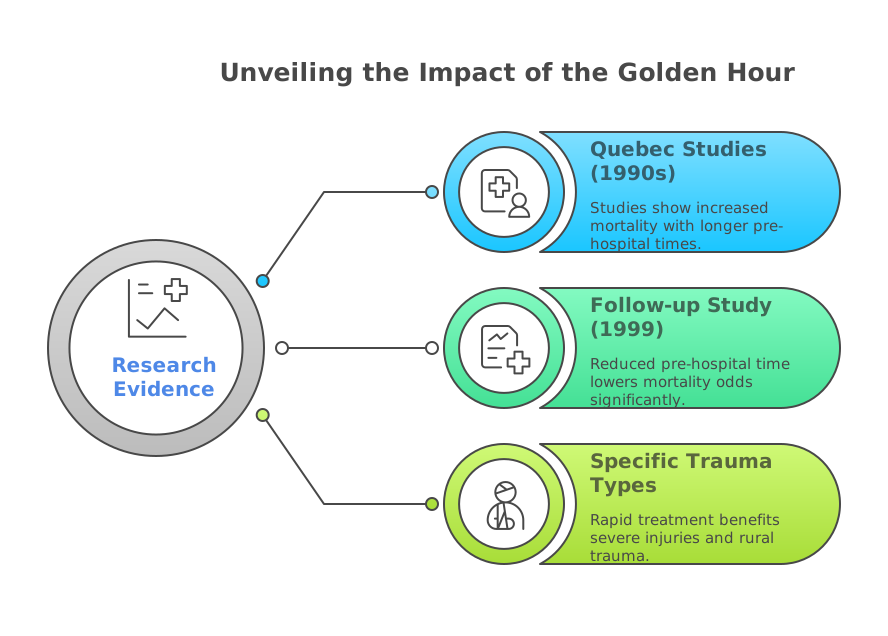
This chart shows real research backing the idea behind Dr. Cowley's Golden Hour. Studies confirmed that getting to care faster greatly improved survival rates.
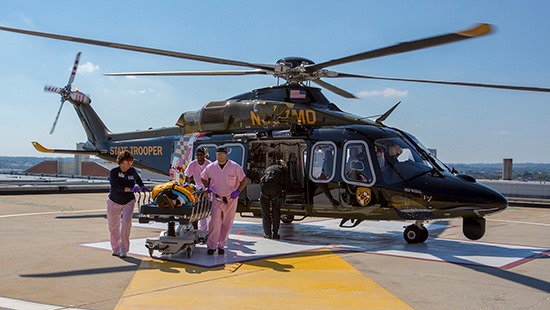
Racing the clock—bringing trauma patients in during the Golden Hour. (Courtesy University of Maryland Shock Trauma Center)
Before this system, ambulance services often consisted of vehicles with little medical equipment operated by personnel with minimal training. Under Dr. Cowley's leadership, Maryland developed more than 600 well-equipped emergency ambulances, 11 public service medevac helicopters, and trained over 27,000 emergency medical providers.
The system Dr. Cowley built relied on cooperation between doctors, nurses, hospital administrators, ambulance services, fire departments, and law enforcement. This collaborative approach became a model for emergency medical systems across America and around the world.
Dr. Cowley's vision extended beyond a single trauma center. He believed that every injured person deserved access to the best possible care. In 1970, he began working toward a statewide system of emergency medical services in Maryland.
His dream gained powerful support in 1973 when Maryland Governor Marvin Mandel issued an executive order establishing the Maryland Institute for Emergency Medicine. Dr. Cowley was appointed as director, giving him the authority to build the nation's first statewide EMS system.
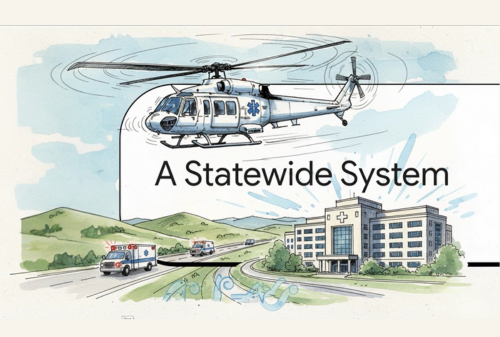
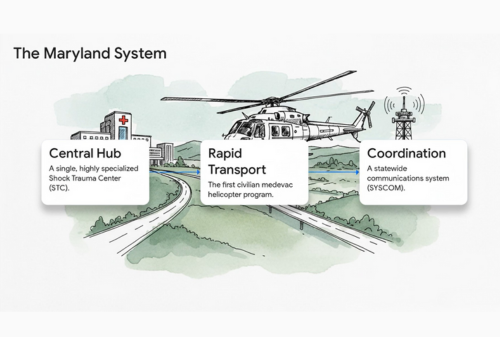
On March 19, 1970, Dr. Cowley became one of the first U.S. physicians to use helicopters for civilian medical evacuation—an innovation that revolutionized rapid trauma care and set the global standard.

Dr. Cowley's influence extended into disaster medicine and emergency preparedness. He recognized that the principles of trauma care could be applied to mass casualty events and natural disasters. Under his leadership, Maryland developed some of the first comprehensive disaster response protocols for civilian medical systems.
His approach to disaster medicine emphasized:
The Maryland Institute for Emergency Medicine, under Dr. Cowley's direction, became a leader in disaster preparedness training, developing protocols that would later be adopted nationwide.

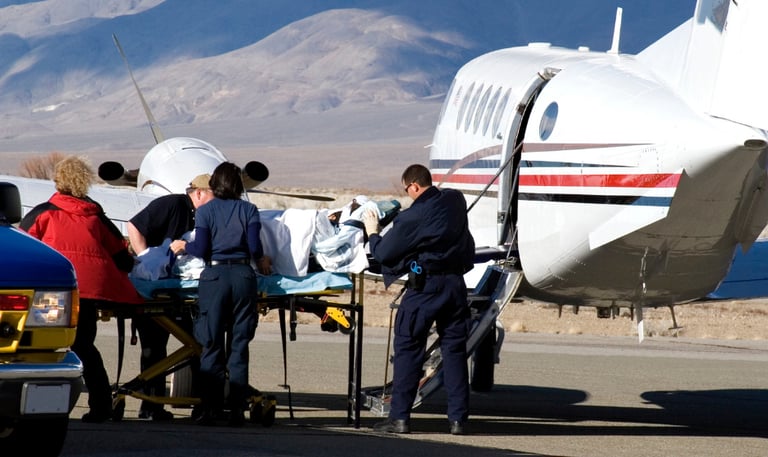
Today's Shock Trauma Center features:
Dr. Cowley's trauma care principles have had a profound impact on military medicine. His emphasis on rapid evacuation and immediate treatment of the critically injured revolutionized battlefield medicine, particularly during the conflicts in Iraq and Afghanistan.
Military medical teams adopted the "Golden Hour" principle, developing rapid evacuation protocols that dramatically reduced mortality rates among wounded service members. The military's implementation of forward surgical teams—small, mobile surgical units positioned near combat zones—was directly influenced by Dr. Cowley's trauma care model.
The U.S. Department of Defense has credited these trauma care principles with achieving the highest survival rates in the history of modern warfare. Wounded soldiers who would have died in previous conflicts now routinely survive thanks to the rapid trauma response systems pioneered by Dr. Cowley.
This military-civilian partnership continues today, with military medical personnel regularly training at the R Adams Cowley Shock Trauma Center.
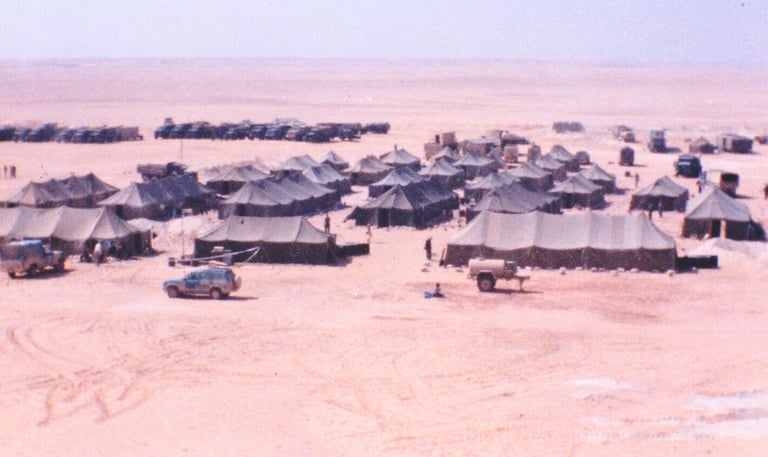
View of a partially erected 5th Mobile Army Surgical Hospital during Gulf War I. (Iraq, 1991) (Courtesy MSG Michael Rodriguez, U.S. Army, Ret.)

Saving lives was only the first step in Dr. Cowley's trauma care mission. He knew recovery had to go further. Patients needed real rehabilitation—physical, cognitive, and emotional. So he built a system that didn't stop at the ER doors.
Dr. R. Adams Cowley revolutionized trauma rehabilitation by designing a first-of-its-kind model that connected the Shock Trauma Center directly with Montebello Rehabilitation Hospital. Unlike typical hospital transfers where patients were handed off to new teams, his model kept the same departments—and often the same caregivers—involved from emergency treatment through rehabilitation.
This continuity was key. Physical therapy, speech-language pathology, and nursing staff worked across both locations, ensuring care didn't reset, it advanced.
One of Dr. Cowley's boldest ideas was embedding a Speech-Communication Disorders Program directly into trauma care. The program:
National symposia on traumatic brain injury, hosted by the team, grew from just 70 attendees to over 700 participants from 41 states and multiple countries. These events brought together experts across neurosurgery, emergency medicine, speech-language pathology, psychology, nursing, and other fields.

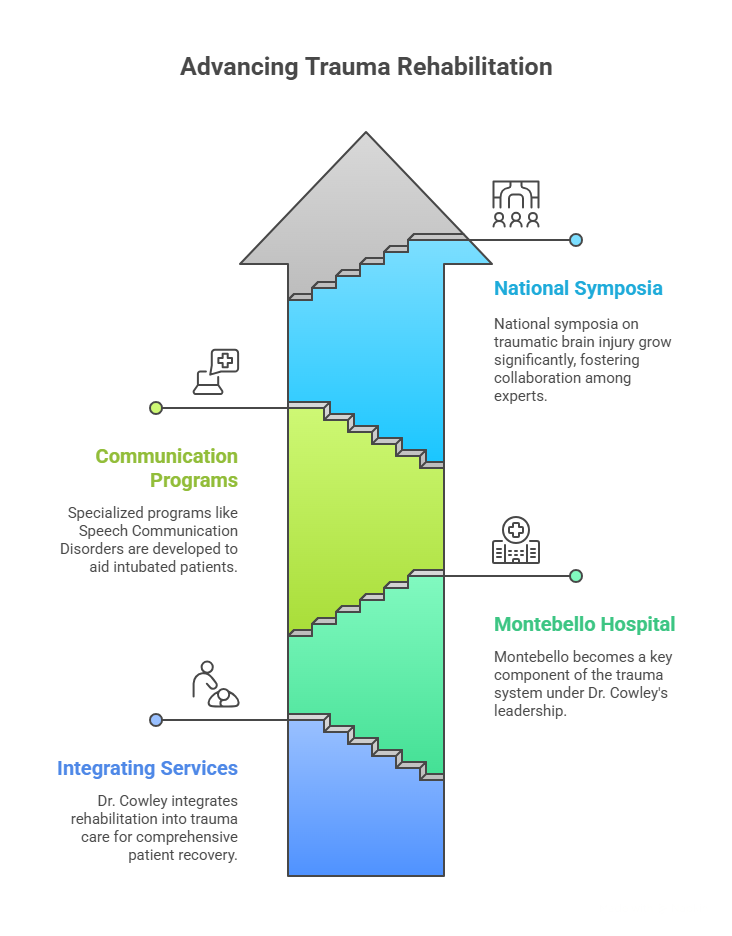
This chart shows how Dr. Cowley advanced trauma rehabilitation—starting with integrated services, expanding through Montebello Hospital, and culminating in national symposia.
Dr. Cowley was known not just for his vision, but also for his intense dedication and work ethic. Colleagues recall that nothing was impossible to him – he would work around the clock and expected the same focus from his team.
He had a single driving mission: to give the critically ill and injured the best chance of survival. Often he said that every patient has "the right to the best medical care, according to the state of the art – not according to location, severity of injury, or ability to pay."
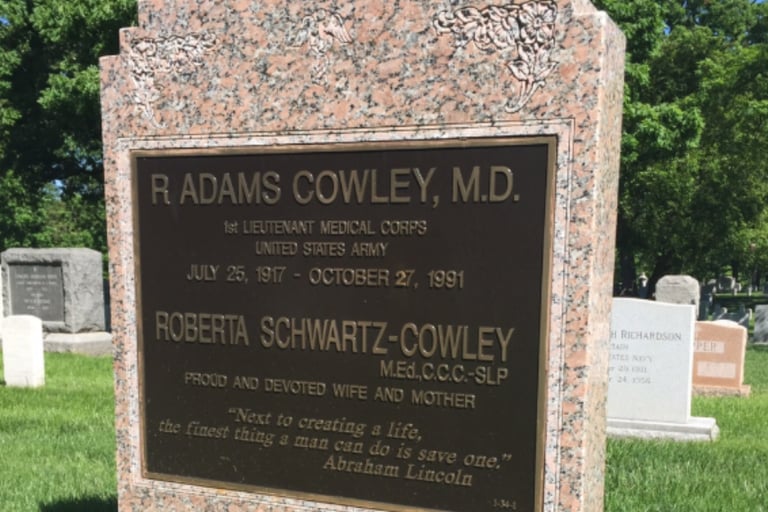
Dr. R Adams Cowley passed away unexpectedly on October 27, 1991, at the age of 74. He had a heart attack at his home that afternoon, and even the system he created could not save its founder in that moment. He was laid to rest with full military honors at Arlington National Cemetery.
Throughout his career, Dr. Cowley published over 400 medical articles and wrote or edited numerous textbooks to spread knowledge about trauma care. He trained hundreds of doctors, nurses, and paramedics, who then started trauma centers and EMS programs in other states and countries.
In 1989, Dr. Cowley retired as the director of Shock Trauma and MIEMSS. He left a robust legacy: emergency medicine became a recognized medical specialty in large part due to his work, and trauma systems modeled after Maryland's now exist worldwide.
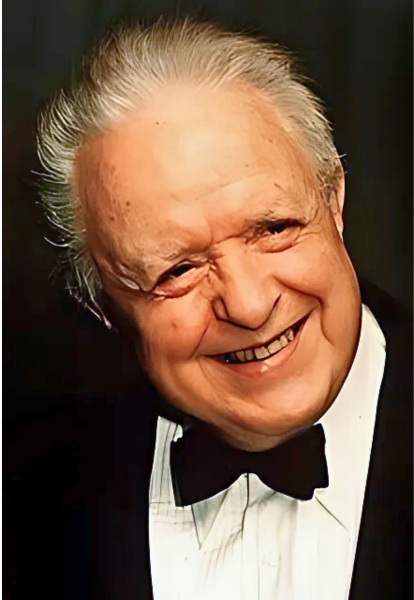
Dr. Cowley later in life, pictured with the warmth and optimism that matched his lifelong dedication to saving lives.