Dr. Cowley didn't just practice medicine—he transformed it through groundbreaking research and publications.
Dr. Cowley's research fundamentally changed how the world understands shock and trauma. He described shock as "a momentary pause in the act of death"—a condition that, with the right treatment, could be reversed.
His work didn't stop at the bedside. He studied how full trauma systems—from EMS to rehab—could save lives. The data spoke for itself. His findings helped win over skeptics in government and medicine who once doubted his approach.
Research remained a core part of the programs he built. His Speech Communication Disorders Program led groundbreaking studies on brain injury and recovery. That work sparked a national symposium. By its fifth year, the Speech Communication Disorders event drew over 1,000 experts from the U.S. and around the world.
To Dr. Cowley, sharing knowledge mattered just as much as discovery. His books and papers became must-reads for medical students, EMS crews, and hospital leaders around the world.
He created training materials that helped standardize trauma care and EMS practices across Maryland. These tools set the standard and later shaped national and international training programs.
His team also launched the National Traumatic Brain Injury symposia. It started small but grew into a major event. Experts came from all over—speech therapists, nurses, psychologists, physical therapists, social workers, and even legal professionals.


These eight books formed the backbone of modern trauma care by combining science, experience, and practical guidance. Covering everything from surgical techniques and critical care protocols to disaster response and the science of shock, they offered a complete framework for treating the most severely injured patients.

A detailed guide to performing surgery on trauma patients. Includes step-by-step instructions, case studies, and the science behind emergency surgical decisions. Helped standardize how trauma surgeons operate in critical situations.
This companion to the surgical textbook focuses on non-surgical care. Covers how to treat trauma patients in the ICU, manage shock, control bleeding, and monitor vital signs. A must-have for emergency physicians and critical care teams.

A quick-reference guide filled with practical tips for treating life-threatening injuries. Designed for use in high-pressure situations, this handbook was commonly kept in the pockets of trauma nurses, doctors, and medics.
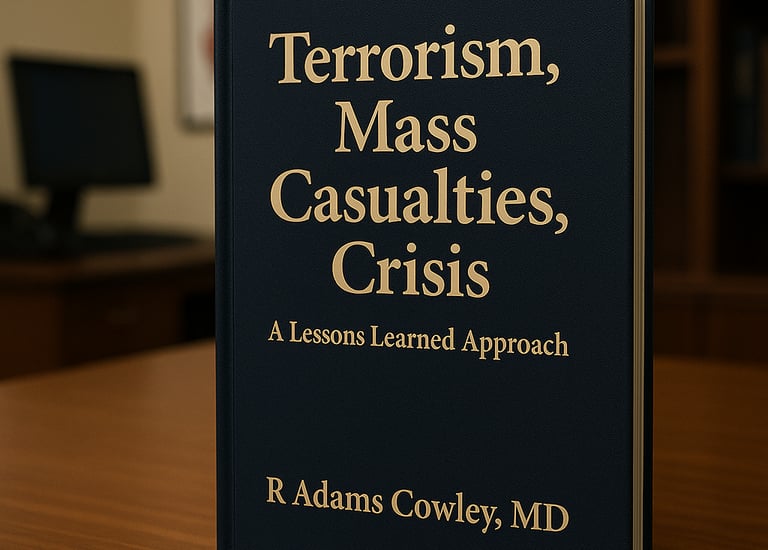
Written in response to real disasters, this book outlines how to prepare for and respond to terrorist attacks or mass casualty events. Shares hard-earned lessons and offers strategies for emergency planners.

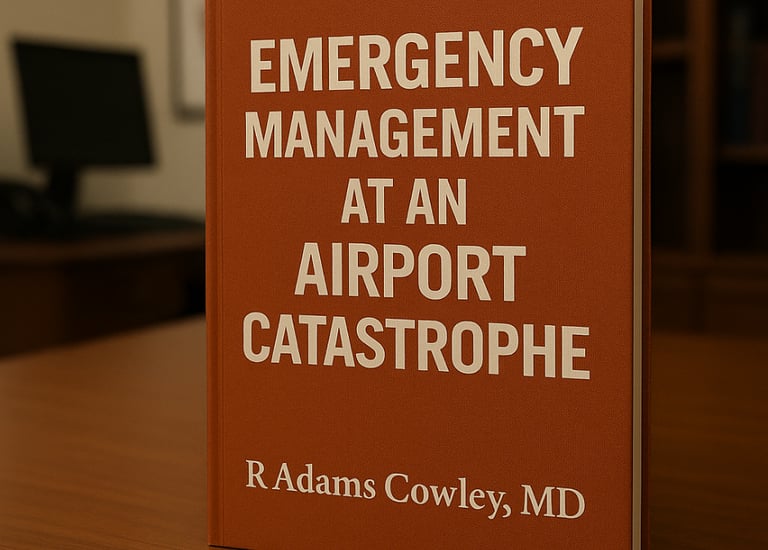
Focuses on handling disasters at airports, including crashes, fires, and large-scale evacuations. Provides detailed planning tools for coordinating police, fire, and medical responders in high-traffic areas.
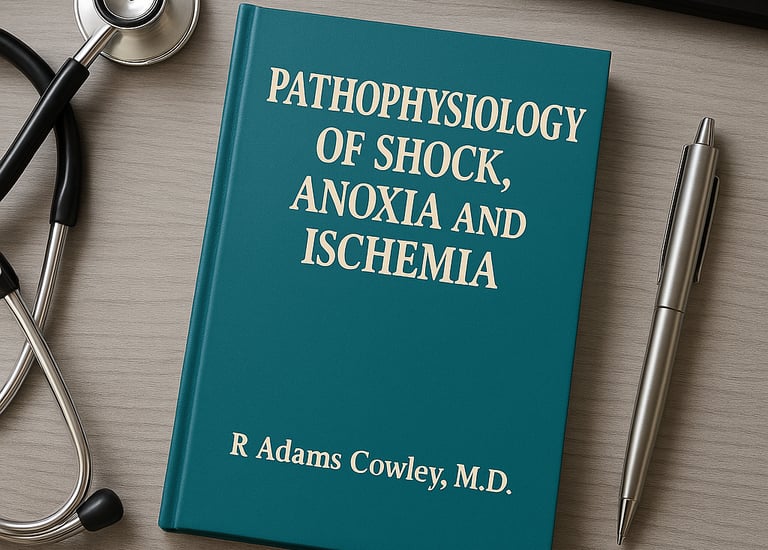
An in-depth medical reference exploring the science behind shock, oxygen deprivation, and restricted blood flow. Explains how these conditions develop and offers insight into preventing organ damage and death in trauma patients.
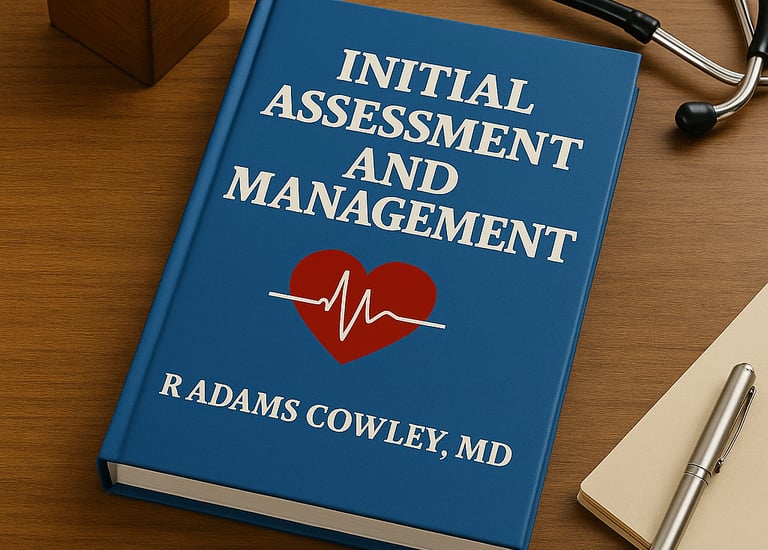
A practical guide that outlines the critical steps first responders and emergency teams should take during the first moments after a traumatic injury. Focuses on fast, effective decision-making to stabilize patients and improve survival.
A comprehensive manual that organizes trauma care into clear protocols. Especially useful for training staff at trauma centers and was used to help standardize care across Maryland and beyond.
Many of these texts may be out of print. For illustrative purposes only — covers shown are representative.
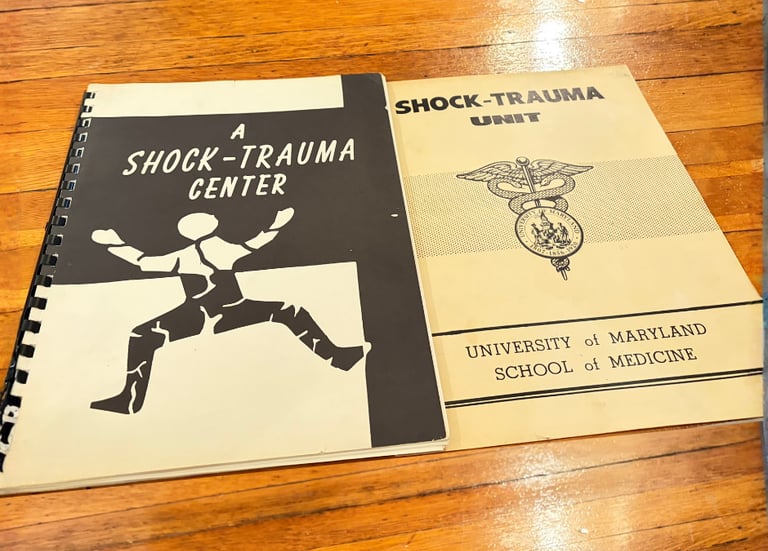
Some of the first shock-trauma publications ever written by Dr. Cowley. (Photo Courtesy R Adams Cowley Private Collection)
These five groundbreaking journal articles by Dr. R. Adams Cowley helped shape modern trauma care and emergency medical systems. Together, they built the scientific and operational case for the systems that now save lives every day.
"A Study of Shock and Trauma in Man Utilizing the Resources of a Clinical Shock Trauma Unit." Maryland State Medical Journal 16(3):53–65 (1967). This early paper reports on Dr. Cowley's first clinical findings from the Shock Trauma.
"An Economical and Proved Helicopter Program for Transporting the Emergency Critically Ill and Injured Patient in Maryland." Journal of Trauma 13(12):1029–1038 (Dec 1973). Documents Maryland's successful first use of medevac helicopters for civilian transport.
"A Total Emergency Medical System for the State of Maryland." Maryland State Medical Journal 24(7):37–45 (July 1975). Dr. Cowley outlines his vision and plan for an integrated statewide EMS system in Maryland.
"Trauma Center: A New Concept for the Delivery of Critical Care." Journal of the Medical Society of New Jersey 74(11):979–987 (1977). Dr. Cowley describes the organization and benefits of a dedicated trauma center as a new health care model.
"Providing Safe Med-Evac Helicopter Transport: Maryland's 18-Year Experience." Maryland Medical Journal 37(8):521–524 (1988). Dr. Cowley and co-authors review nearly two decades of data showing the impact and safety of helicopter transport for trauma patients.
Dr. Cowley served as a committee member for this landmark report, often referred to as "The White Paper." It brought national attention to the poor state of emergency care in the U.S. and led to major reforms in EMS systems, training, and legislation.
In this analysis, Dr. Cowley focused on improving the management of blood supply in emergency settings. The report explored how better planning and use of blood products could improve outcomes for trauma patients and reduce waste.
Authored by Dr. Cowley, this report called for a nationally coordinated trauma care system. It emphasized the cost and human toll of unorganized trauma response and urged federal investment in structured trauma networks.
Dr. Cowley also served on editorial boards for:
Dr. Cowley joins TV anchor Joan Lunden on Good Morning America (1980) to explain the life-saving mission of Maryland's Shock Trauma Center and how the system works to deliver fast, specialized care to the most critically injured patients.
Dr. Cowley appears on Maryland Public Television's In Person, where he shares what the Shock Trauma Center is and why it plays a vital role in saving lives.